
“The Math Isn't Mathing: Why the Future of Aged Care Isn't More Beds.”
Reflecting on Natalie Siegel-Brown’s National Press Club address, and why creating genuine homes matters more than building facilities.
On Wednesday, 15 July 2026, outgoing Inspector-General of Aged Care Natalie Siegel-Brown delivered what may become one of the most significant addresses on the future of ageing in Australia. It wasn't simply a critique of aged care reform. It was a challenge to rethink the question we've been asking for decades.
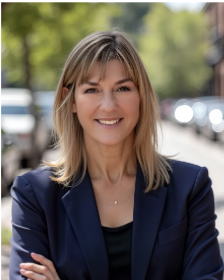
"We cannot build enough beds while making it harder for people to stay out of them."
That sentence resonated deeply with me. Because perhaps the greatest challenge facing aged care isn't how we build more residential facilities. It's how we help people avoid needing one for as long as possible.
We’ve Become Experts at Responding to Crisis
One of the strongest themes in Natalie's address was that Australia has become very good at responding once people reach crisis. We're much less effective at preventing people from getting there. She described a system that continues to invest heavily in the most expensive end of care while making it increasingly difficult for older Australians to access the everyday supports that preserve independence:
Meals.
Transport.
Social connection.
Home modifications.
Practical assistance.
Support for family carers.
These aren't optional extras. They're often the very things that delay decline, maintain confidence and keep people connected to the lives they've built.
One of the notes we found ourselves writing during the address was simple, “We've never been good at prevention.“
Whether it's healthcare, disability or aged care, our systems often wait until people are struggling before meaningful support becomes available. Yet the evidence consistently points in the opposite direction. Support people earlier. Maintain independence longer. Reduce crisis. Delay or even avoid the need for residential aged care. Remarkably, it also costs less.
Natalie challenged us to stop asking:
"How do we manage growing demand?"
And instead ask:
"How do we stop generating so much demand in the first place?"
That is a profoundly different conversation.
The maths doesn't add up.
One story from her speech perfectly illustrated the problem. An older woman needed a simple pair of crutches. Her GP prescribed them. The cost? Around $50. Instead of simply providing them, the system required an occupational therapist assessment first. The result was an estimated $1,800 process and a three-month wait before she could receive what had already been clinically recommended. During those three months, her confidence declined. Her risk of falling increased. Her independence reduced. If she had fallen, the human and financial costs would have been exponentially greater. Sometimes smaller interventions have the bigger impact.
This is the reality we see every day. Many of the people who arrive at Honey Bee Homes haven't reached the point where they no longer value home—they've reached the point where home has become unsustainable. Not because of a single sudden event, but because months or years of coordinating carers, appointments, equipment, therapies and daily support have left them and their families physically and emotionally exhausted.
In many ways, Honey Bee Homes has become a home away from home; a place where people can continue living ordinary lives while families are relieved of the relentless responsibility of coordinating care.
Another point from her address demands serious attention: those who can afford to contribute toward their care should, while those who can't must remain fully supported. We agree with this principle, but we also believe funds should be more evenly distributed across every phase of care.
The broader aged care system treats care like a transactional menu of tasks, charging progressively more as a person's physical needs increase. We are trialling a fundamentally different approach.
At Honey Bee Homes, we maintain a set daily fee regardless of whether a resident is thriving independently or nearing the end of life. Why? Because in our experience keeping someone well, active and connected takes just as much dedication, energy and heart as supporting them to die with dignity. We don’t believe care should be an itemised invoice that scales with decline; it should be an unwavering commitment to human life at every stage.
Perhaps There Is Another Option
For decades, we’ve tended to think about ageing as a binary choice: remain at home, or move into residential aged care. But there is another option. Ordinary homes. Embedded within local communities. Homes where relationships come before routines. Where care supports life rather than becoming life. Where people continue gardening, cooking, walking to the local café, enjoying visitors and remaining part of their neighbourhood.
Homes that feel like home because they are home. Perhaps the future isn't simply about building more aged care beds—it's about creating more genuine homes.
We All Have a Stake in This
Natalie concluded by reminding us that every one of us has a stake in how Australia ages. If we are fortunate, we will all grow old. The question is not simply whether the system can provide care, but whether it can help people continue living lives filled with dignity, purpose, connection and belonging.
Natalie's speech reaffirmed why Honey Bee Homes was created. We didn't set out to replace residential facilities; we set out to offer another option. An option that recognises ageing is not simply about managing care—it's about home, relationships and belonging.
As Australia grapples with the challenges of an ageing population, the answer isn't simply building more places to deliver care. It's creating more homes where people can simply continue living an ordinary life.